


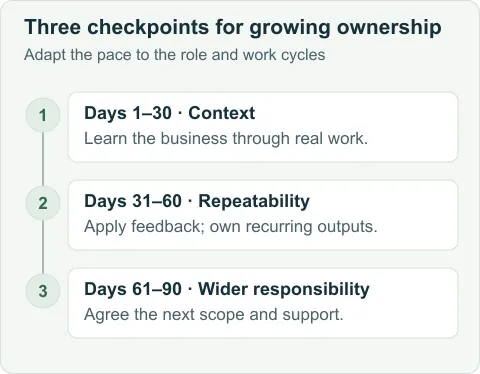
Use 30, 60 and 90 days as review points for growing responsibility. The pace depends on the role, experience, complexity and complete work cycles the person has had a chance to learn.
A remote finance professional needs access to the business, its people and its working standards. A calendar of assignments helps, but the onboarding plan also needs a manager who can provide context and colleagues who understand where the new person fits.
Before day one: make the role workable
Agree the first meaningful deliverable and how it connects to the fuller role. Name the manager, reviewer and colleagues who supply information. Prepare the appropriate system access and an example of an accepted output.
Put the weekly one-on-one and relevant team or project meeting in the calendar. Confirm working-hour overlap, the normal communication channels and the route for urgent questions. Introduce the professional as part of the team, with a clear explanation of what they will own.
Days 1–30: learn the business through real work
Walk through the company's activities, reporting priorities and how the output will be used. Let the person meet the stakeholders behind the inputs. Explain the definitions, recurring exceptions and decisions that are easy for an established colleague to take for granted.
Begin with a thoroughly defined assignment. Have the professional explain the brief back, work through it with support and discuss both the submission and the reasoning behind it.
| At the first review | Evidence to discuss |
|---|---|
| Business context | Can the person explain who uses the work and why it matters? |
| Access and relationships | Can they find the right inputs and reach the people who clarify them? |
| First output | Has an agreed piece of work been prepared, reviewed and revised? |
| Support needs | Which gaps require clearer instructions, access, examples or practice? |
Zapier's remote onboarding guide describes the value of business context, relationships, practical learning and a mix of live and self-paced activity. The finance review points here are our suggested adaptation.
Days 31–60: build repeatable ownership
Repeat the work and apply the feedback from the earlier cycle. Ask the professional to anticipate the inputs, maintain the working notes and bring unresolved questions to the right person in time.
Where the evidence supports it, add a related responsibility. For example, someone who can prepare a reporting section may begin coordinating its recurring inputs and review checkpoint. Make the scope change explicit, including any new access or authority it requires.
| At the second review | Evidence to discuss |
|---|---|
| Repeatability | Does the next submission reflect the agreed standard and earlier feedback? |
| Coordination | Are inputs, dependencies and review times being managed? |
| Judgment | Does the person distinguish a supported explanation from an open question? |
| Capacity | Is the added scope realistic alongside the recurring workload? |
Keep the weekly conversations in place. More independence in preparation still needs a working relationship with the manager and wider team.
Days 61–90: agree the next level of responsibility
Review the complete cycles the person has actually experienced. A quarterly assignment may have produced only one full cycle. A new system, incomplete records or limited access to stakeholders may also change the pace.
Where ready, broaden responsibility for the agreed workstream. The professional might coordinate contributors, prepare the complete output and manage its review handoff. Final decisions and approvals stay with the people designated by the company.
| At the third review | Agree the next step |
|---|---|
| Scope | What can the professional now own within the role? |
| Quality and exceptions | What still needs closer review or additional experience? |
| Process knowledge | Are useful decisions, contacts and recurring steps documented? |
| Continuing support | Who remains available, and when will progress be reviewed again? |
Review the team's side of onboarding too
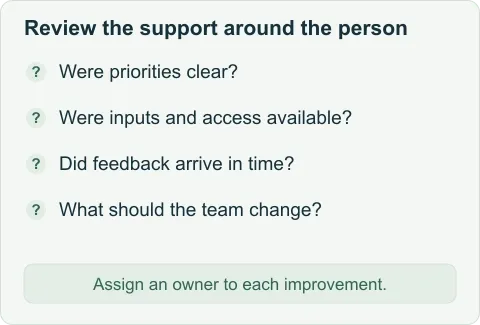
Use a quarterly Start / Stop / Continue conversation to examine the working arrangement. Did the manager provide timely answers? Were business changes shared? Did competing requests leave priorities unclear?
You can coordinate this with the 90-day conversation while keeping two questions distinct: how the professional is developing, and what the team should improve. Give each agreed change an owner and a follow-up point.
Day 90 is a checkpoint, not a promise of full independence. Start the hiring conversation with the responsibility you want the person to grow into and the support your team can provide along the way.
Related: Controller handover checklist · Remote financial analysts · Talent solutions.