

The administrator has delivered a draft. A portfolio company has not sent its quarter-end figures. A partner wants to revise the commentary, and an LP is waiting for an answer before the pack goes out.
All four items belong to the reporting cycle. They do not necessarily belong to the same person. Investor reporting needs one person coordinating the cycle, with named owners for each input and decision. Before hiring an analyst, identify the work currently falling between those owners.
Find the gap before defining the role
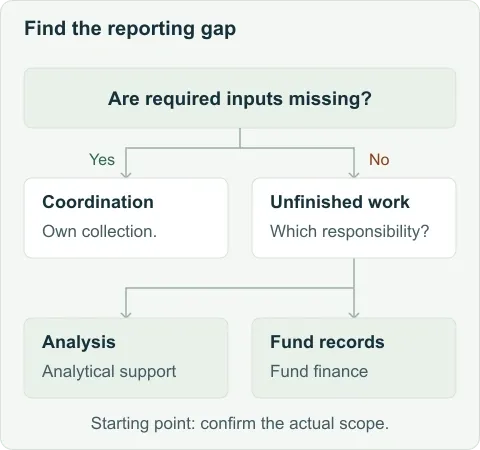
Map the three reporting inputs
| Input | Agreed responsibility |
|---|---|
| Portfolio-company information | Company contacts supply business data; an analyst can coordinate collection and specified checks. |
| Fund and investor records | The responsible finance team or administrator prepares records and calculations within its remit. |
| Narrative and release | Designated fund reviewers accept the relevant commentary and approve the final package. |
Begin with the actual deliverables in your reporting calendar and the service scope agreed with your administrator. The package might combine fund financial information, investor statements, portfolio updates and narrative commentary.
The fund's documents, investor arrangements and applicable rules determine its requirements. If the administrator prepares financial statements but does not collect portfolio-company data, someone still needs to own that collection process.
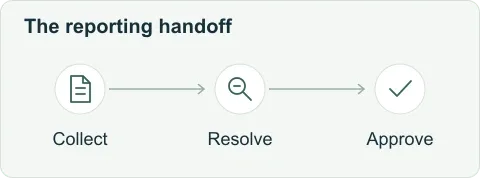
Clarify what the analyst can prepare
| Area | Preparation and decision ownership |
|---|---|
| Company information | Prepare: track requests, sources, dates and definitions. Resolve: company contacts answer data questions; designated reviewers accept their use. |
| Fund-accounting queries | Prepare: coordinate questions and agreed checks. Resolve: the named fund-finance owner or administrator handles accounting matters within its remit. |
| Commentary and release | Prepare: supported drafts, versions and open questions. Approve: designated fund reviewers accept commentary and release. |
A founder's estimate, company accounts and an approved fund valuation are different inputs. Preserve their labels and review status; a company update does not automatically replace the fund's approved valuation basis.
Record accepted corrections across affected parts of the pack. Avoid changing a figure just to make it agree with another unverified version. In small funds, one person may hold several roles; record each responsibility separately.
A date mismatch that changes the handoff
Illustrative reporting scenario with fictional details.
A portfolio company sends a June cash balance in a file labeled “September update.” The administrator has issued a draft and a partner is already writing commentary.
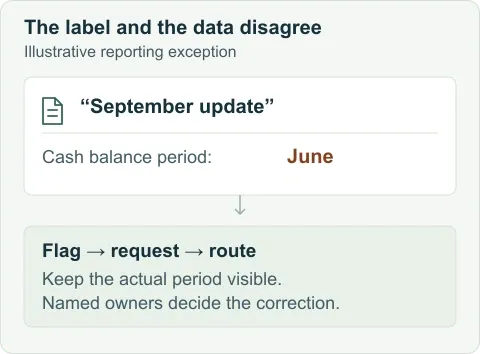
The balance stays labeled June. The analyst requests the intended submission and alerts the reporting owner. That owner determines which accounting, valuation or narrative work may need another review.
If a correction arrives, record the decision and updated versions. If information remains missing at the deadline, the authorized reviewer decides the permitted treatment. An empty field should not silently become zero or an unmarked estimate.
Build the calendar around review time
Work backward from the fund's delivery commitments. Leave time for questions and corrections between preparation and approval.
| Checkpoint | Evidence to retain |
|---|---|
| Scope agreed | Deliverables, periods, contributors and reviewers. |
| Inputs recorded | Source, date, version and missing-item owner. |
| Exceptions routed | Question, decision-maker and accepted correction. |
| Package accepted | Reviewer decisions, including treatment of open items. |
| Release recorded | Approved version, authorized recipients and later corrections. |
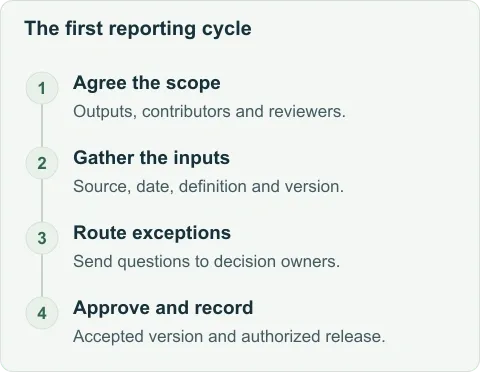
Dates should reflect the administrator's process and the companies' ability to supply information. A calendar that expects final figures before company close is complete creates avoidable pressure.
ILPA's Templates Hub offers reporting resources to discuss with fund finance and advisers. Use the relevant guidance for your fund; the staffing framework here does not establish a universal reporting obligation.
Hire for the missing responsibility
| Where the cycle is stuck | What to look for |
|---|---|
| Missing submissions, scattered queries, no clear calendar | Reporting coordination: organized follow-up and enough financial understanding to identify missing context. |
| Reliable inputs waiting for comparisons or draft commentary | Analytical support: capability in the agreed checks and deliverables. |
| Unresolved fund records, allocations or accounting work | Fund-accounting expertise: scoped with fund finance and the administrator. |
A work sample that tests judgment
Give the candidate a fictional reporting bundle and ask for an exception note with proposed routing.
| Include in the bundle | Look for in the response |
|---|---|
| Conflicting dates | The actual period stays visible; the intended input is requested. |
| An unanswered company query | A named next owner and a clear open status. |
| Two narrative versions | The candidate identifies the review history and avoids treating either as approved without support. |
Assess both issue recognition and whether the question reaches the person who can resolve it.
For internal company-performance reviews, the portfolio reporting workflow guide covers the operating pack. LP reporting has a different audience and approval purpose, even when some information is shared.
| A starting brief for the first cycle |
|---|
| Coordinate company-data requests and the reporting calendar. Record sources and versions, perform agreed checks and prepare an exception note. Draft commentary from supported information. Fund accounting, valuation decisions and release remain with the named owners. |
Add the entities, reporting frequency, systems, working-hour overlap and reviewer. Bring the tasks falling between your team and administrator to Nexteam and we can help define and recruit for the missing responsibility.