


A partner has a useful view on a sector. The website still describes last year's focus, and an approved transaction has not made it into the firm's credentials. Everyone agrees the material should be updated; nobody has clear responsibility for moving it through drafting, review and publication.
Marketing support for investment firms can take ownership of that execution. The brief should identify the audience, the material to produce and the people who approve the firm's claims. PE, VC and M&A firms may share some tasks, but their audiences and work products differ.
Start with a recurring output that matters to the firm: a current sector page, a useful founder resource, an approved credentials deck or a newsletter the partners can confidently share.
Match the work to the firm's audience
“Marketing” can mean several different jobs. Before choosing a role, decide who should find the material useful and what they should understand after reading it.
| Firm | Example outputs |
|---|---|
| PE | Approved sector articles, permissioned portfolio descriptions and current firm credentials. |
| VC | Founder resources, event communications and approved portfolio stories. |
| M&A | Sector pages, permissioned deal announcements and articles for business owners. |
These are illustrative scopes, not a standard package every firm needs. A small VC firm may prioritise an event and founder newsletter. An M&A boutique may need a reliable owner for credentials and website updates before adding a regular publishing schedule.
Keep the purpose of each assignment explicit. Publishing an industry article, researching acquisition targets and preparing investor communications involve different work, reviewers and measures of success.
Delegate the workflow with clear review points
A marketing coordinator or editor can maintain the content calendar, gather source material, draft copy, prepare approved visuals, update the CMS and schedule material after approval. They can also maintain a record of published links, source files and future update dates.
The firm still needs an owner for positioning, investment views, transaction permissions and sensitive statements. Assign a reviewer who has the knowledge and authority to approve the specific piece. A polished draft is not evidence that its claims have been checked.
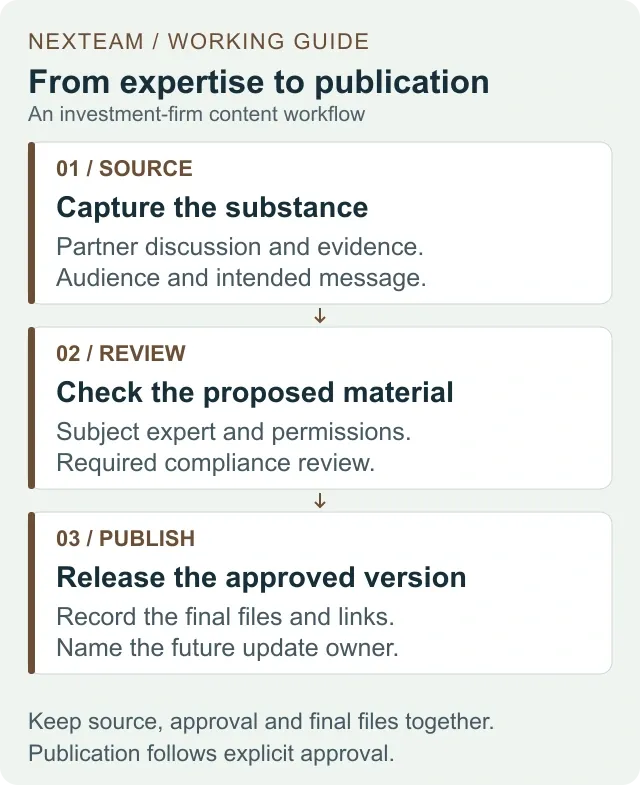
For a sector article, the workflow could be:
- Source: a partner discussion, approved research and a clear audience brief.
- Draft: an article with links to supporting material and questions flagged for the partner.
- Review: subject-matter approval, permission checks and any required compliance review.
- Publication: the approved version goes live, with its final files and update owner recorded.
Agree the review slot before building a large queue of drafts. If a partner cannot review the material, a higher publishing target simply creates more unfinished work.
Give the role a concrete first assignment
Here is an illustrative assignment for an investment firm. It is a way to assess scope and working style, not a claim about a Nexteam engagement.
The source: a partner conversation about a recurring question from the firm's intended audience, supported by material the firm is permitted to use.
The deliverables: one website article, two short LinkedIn drafts, a newsletter introduction and proposed updates to a relevant sector page. Each format should serve its reader; it should not be a longer or shorter copy of the same opening paragraph.
The review file: the source of each factual claim, permissions needed, open questions and a named approver. Label draft opinions and factual statements clearly enough that the partner can review both.
The completion record: approved versions, publication links, publication dates and the person responsible for correcting or updating the material.
Ask the candidate to explain how they would handle a missing source or an unavailable reviewer. Their response is often more useful than a portfolio full of attractive posts with no explanation of how the work was approved.
Separate marketing, business development and investor relations
Marketing execution makes the firm's approved expertise and credentials available to an audience. Business development may involve target research, relationship records and outreach. Investor relations may include investor-specific reporting and communications. If one person will support more than one area, define separate outputs and review paths.
For example, a request to “help with deals” is too broad. Does the firm need a sector article, a target-company list, an investor update or transaction materials? Each requires different source access and experience.
For the research side, our M&A analyst research workflow case study offers a separate point of reference. Use it to clarify the boundary between maintaining marketing material and supporting an analyst's research queue.
Build approval into the publishing process
Before publication, the firm's reviewer should confirm the factual support, permitted use of names and transaction details, and any disclosures or restrictions that apply. Do not assume that a public transaction gives unrestricted permission to use a client's name, logo or comments.
For investment advisers registered or required to register with the US SEC, the SEC's investment adviser marketing guide explains restrictions on misleading or unsubstantiated advertising and conditions affecting performance, testimonials and endorsements. The applicable reviewer should decide how those requirements affect a proposed communication. Other firms and jurisdictions require their own assessment.
Keep a clear distinction between “ready for review” and “approved to publish.” The marketing role can coordinate that process; it should not infer approval from silence or replace the firm's required review.
Measure whether the work is useful
Start with whether the agreed material is accurate, approved and current. Track where work stalls, how many review rounds it needs and whether partners can find and reuse the final versions.
Where reliable tracking exists, look separately at readership, relevant enquiries and relationship conversations. An impression is visibility; it does not establish that the content produced an opportunity. Keep the source and limitations of any attribution clear.
Preparing a marketing support brief? Discuss the role with Nexteam. Share the firm type, audience, recurring deliverables and approval process so the conversation can focus on the experience the assignment requires. Your firm remains responsible for directing the work and approving publication.