


Your M&A analyst has a model to update and a management question to investigate. Instead, the morning goes into finding the latest customer file, locating the owner of an unanswered request and checking which contract version counsel needs.
Document follow-up belongs somewhere in a deal process. When it becomes a recurring assignment, give it a clear owner. A coordinator can manage requests and evidence while analysts, lawyers and transaction leads retain their respective review decisions.
Choose the support around the bottleneck
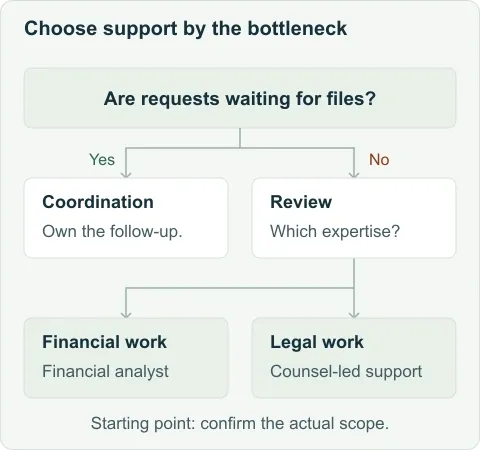
What kind of backlog are you trying to clear?
Take a sample of open requests, with confidential details removed for the hiring discussion. Identify the next action and the expertise needed to perform it.
| The next action | The likely responsibility |
|---|---|
| Locate a file, chase a response, record a version | Deal coordination |
| Reconcile revenue, test an assumption, explain a difference | Financial analysis |
| Prepare delegated legal work or resolve a legal question | Supervised legal support and counsel |
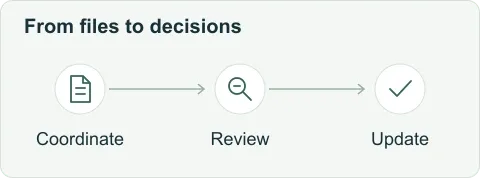
The same request can involve all three. Locating a contract is different from assessing its legal implications. Uploading a revenue file does not complete the financial review.
Also separate a short diligence surge from an ongoing need. Several concurrent transactions create a different staffing requirement from a single compressed diligence window. Set the expected duration and working hours before choosing the engagement model.
Define the handoff between people
| Responsibility | Output and boundary |
|---|---|
| Coordinator | Maintains requests, authorized follow-ups, locations and versions. Delivers an open-items update; escalates conflicting instructions. |
| Financial analyst | Reconciles information, tests assumptions and explains differences. A received file can still require unfinished analysis. |
| Paralegal / counsel | Counsel defines delegated preparation and supervision, and retains legal judgment. Local rules and the matter determine the scope. |
The ABA's commentary on nonlawyer assistance addresses instruction, supervision and confidentiality.
The paralegal transaction-support guide explores that role further. A general coordinator should not be expected to provide independent legal advice because a request concerns a contract.
One request, two open issues
Fictional example for defining the role.
The buyer requests monthly customer revenue and the underlying agreements. The seller uploads a workbook and contracts. The revenue total differs from an earlier finance report, and a contract refers to a missing schedule.
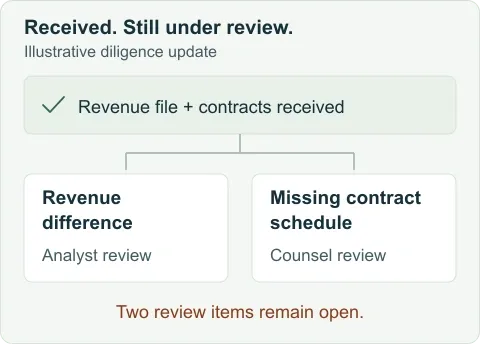
The coordinator records the versions, follows the agreed contact route for the missing schedule and gives the deal lead a concise update. The analyst investigates the revenue difference; counsel determines whether the legal request is satisfied.
If a replacement workbook arrives, preserve which version it replaces and notify the analyst that affected checks may need repeating. Quietly swapping the file link can hide the need for another review.
Use the team's existing request process
Set these points before the first workstream is handed over:
| Before handover | Agree this |
|---|---|
| Tracker | The single source for requests and status. |
| Contact rules | Who issues requests, changes scope and follows up externally. |
| Review owners | Where financial, legal and commercial questions go. |
| Versions | How replacements reach anyone who reviewed the earlier file. |
| Access | Permissions and handling rules for the assignment. |
Some transactions require communication through a particular adviser or company contact. Work within that route. Maintaining a tracker does not require unrestricted access to every folder or authority to circulate documents to new recipients.
For every open item, keep the next action, owner, source version and update date visible. A financial question may remain open until counsel or management supplies context; another reminder alone will not settle it.
Start with one workstream
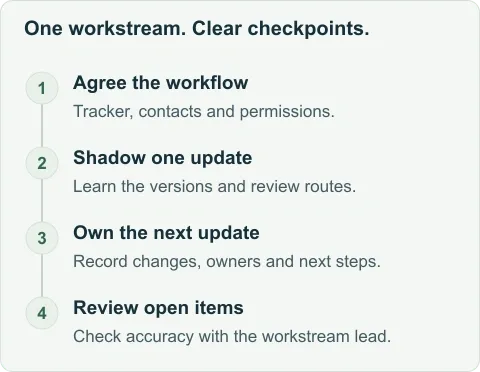
Use a real checkpoint in the deal calendar. Check accuracy before expanding the coordinator's scope.
Test coordination under changing information
Give candidates a fictional request list containing a replacement file, unanswered question, missing attachment and request assigned to the wrong reviewer. Ask for an updated open-items note.
| A useful response shows | It avoids |
|---|---|
| What changed and who needs to act | Marking a request complete because a file arrived |
| Which version the reviewer should use | Overwriting the old reference without explanation |
| A concise, correctly routed follow-up | Unsupported financial or legal conclusions |
For an analyst role, add a separate financial exercise. For a paralegal role, counsel should assess the relevant legal preparation skills. The test should match the assignment.
Review the first workstream
| Check | What you want to learn |
|---|---|
| Status accuracy | Does the tracker distinguish received files from completed reviews? |
| Version routing | Did replacement files reach the people who need to recheck them? |
| Stale items, by cause | Is the delay a missed follow-up, missing evidence or an unavailable decision-maker? |
| A starting brief |
|---|
| Maintain the request list for the agreed transaction workstream. Coordinate authorized follow-ups, preserve file versions and prepare status updates. Route financial questions to the analyst, legal questions to counsel and priorities to the deal lead. The client sets access and communication rules. |
Add deal volume, hours of overlap and the reviewer. Bring an anonymized list of recurring tasks to Nexteam so we can help define the coordinator, analyst or supervised paralegal role your team needs.

Related: M&A research workflow case study · Talent solutions.