


Our recommended baseline is a weekly one-on-one, a weekly team or project meeting, and a quarterly review of how the arrangement is working. Written updates and everyday communication connect those meetings to the work.
This rhythm gives a remote finance professional access to their manager, the wider team and the business context behind their assignments. It also gives both sides a regular opportunity to change what is not working.
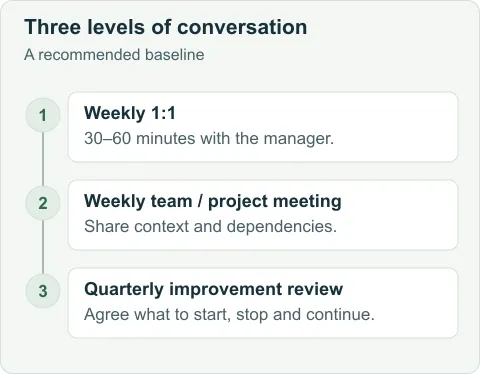
Protect a weekly one-on-one
Set aside at least 30 minutes each week with the person's manager. Allow up to an hour when the workload, onboarding needs or discussion warrants it. Put it in the calendar as a recurring commitment.
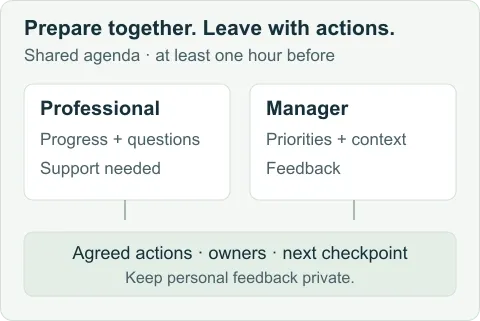
Both people contribute to the agenda at least an hour before the meeting. The professional brings progress, questions and support needs. The manager brings priorities, relevant business changes and feedback. Each should have a chance to prepare.
| Agenda item | Come ready to discuss |
|---|---|
| Progress | Which agreed outputs are complete, and what remains open? |
| Priorities | What matters next, and what has changed? |
| Decisions and dependencies | Where is another person's input or approval needed? |
| Workload and support | Is the scope realistic? What would help the person do it well? |
| Feedback | What is working, and what should either side adjust? |
| Actions | Who will do what before the next checkpoint? |
Use the agenda to guide the conversation, with time for topics the professional wants to raise. Keep personal feedback private. If a deadline is at risk today, use the agreed escalation route today; the weekly meeting is not a waiting room for urgent decisions.
GitLab's one-on-one guidance also supports regular conversations and an agenda to which both parties contribute. The timing above is our recommended operating baseline for this arrangement.
Include the person in a weekly team or project meeting
The one-on-one connects the professional to their manager. A separate team or project meeting, at least weekly, connects them to everyone whose work they depend on.
Include the person in the relevant existing meeting rather than creating a separate remote-only status call. They should hear what colleagues are working on, how priorities have changed and where their outputs fit.
Illustrative example: the accountant hears that customer receipts are delayed, while the FP&A analyst learns when the revised receivables information will be ready. They agree the handoff before the reporting deadline becomes a problem.
For each dependency discussed, record the next owner and checkpoint. Technical work may also need a dedicated review session around the close or project calendar.
Give written updates and chat a clear purpose
Use the team's existing Slack or Microsoft Teams channels, shared calendars and work tracker. Give the professional access to the relevant conversations and introductions, including informal team activities.
| Communication | Use it for |
|---|---|
| Written update | Completed work, open items, next owner and delivery checkpoint |
| Slack / Teams | Questions, links to the work and coordination within agreed response windows |
| Live discussion | Complex questions, misunderstandings or a time-sensitive decision |
| Work record | Agreed actions, decisions and the current version of the output |
An update should help someone act. “Reporting is in progress” is less useful than “The operating-expense schedules are ready for review; the department allocation needs confirmation from the budget owner before the pack can be finalized.”
Agree what counts as urgent and who should be contacted. Buffer's account of its mixed communication approach is useful here: the need for speed and discussion can justify a live call. Record the resulting decision where the team can find it.
Review the arrangement every quarter
Hold a quarterly Start / Stop / Continue discussion. Look at both the professional's work and the conditions the team provides.
| Prompt | Illustrative discussion |
|---|---|
| Start | Should the professional attend the planning meeting that explains upcoming changes? |
| Stop | Are two trackers creating duplicate updates and inconsistent status? |
| Continue | Is the early exception note helping the reviewer prepare? |
Choose a small number of changes, assign owners and agree when to check their effect. Use actual examples from the quarter; leave room for the professional to explain what would help them work more effectively.
When defining a remote role, include the manager, weekly one-on-one and team meeting alongside the deliverables. Those working arrangements are part of helping the person become a functioning member of your team.
Related: AI, context and remote finance teams · Remote accountants · Talent solutions.