


Start with a meaningful assignment defined in detail, then expand responsibility as the person learns how your company produces and uses the work. The aim is for a remote finance professional to take ownership of a complete workstream over time.
A detailed first brief makes your standards visible. The person can see what the finished output should achieve, who contributes to it and how it will be reviewed. Each cycle then gives them more business context and a stronger basis for independent judgment.
Define the first deliverable properly
Choose a substantial piece of the role that can be completed and reviewed. Its complexity should fit the professional's experience and the information available.
The following is a fictional example of a financial analyst joining a team that produces a monthly management report.
| Brief element | What the first assignment specifies |
|---|---|
| Purpose | Prepare one business unit's performance section for the management reporting pack. |
| Coverage | The agreed reporting period, entities, metrics and comparison with plan. |
| Inputs | Approved actuals and budget files, metric definitions, prior pack and relevant business contacts. |
| Required output | Supporting schedules, variance commentary, source references and clearly identified open questions. |
| Working method | Expected checks, file/version conventions and how to request missing information. |
| Review | Named reviewer, delivery cutoff, feedback checkpoint and who approves the finished section. |
Walk through an approved prior example together. Explain why it was useful, which parts required judgment and which details often cause confusion. Give the analyst access to the people who can explain the business behind the numbers.
Review both the output and the reasoning
The first submission shows more than whether the person can use the template. Discuss how they chose sources, investigated differences and decided what needed escalation.
If a variance explanation is incomplete, establish why. The analyst may have missed a check, used an outdated input or lacked access to a business owner. Each calls for a different response.
Give specific feedback and have the person work through the revision. Record useful decisions in the process notes so the next cycle benefits from the review. Keep the reviewer available as the person learns your company's expectations.
Expand ownership through complete cycles
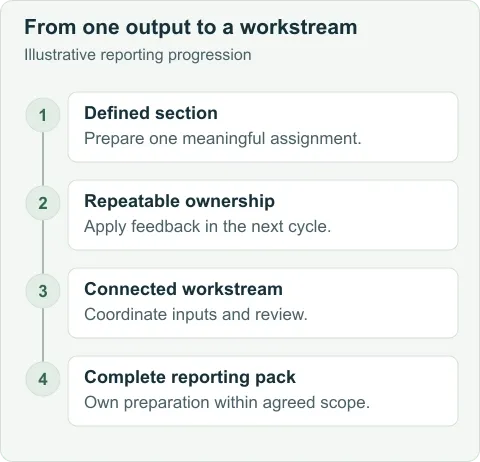
Use the work itself to decide the next scope. In this example, the progression could look like this:
| Stage | Responsibility added |
|---|---|
| Defined deliverable | Prepare the specified business-unit section using the agreed inputs and checks. |
| Repeatable ownership | Prepare the next cycle, apply earlier feedback and anticipate recurring information needs. |
| Connected workstream | Coordinate related inputs, follow up with contributors and manage the agreed review checkpoints. |
| Complete output | Assemble the full reporting pack, explain significant movements and bring remaining decisions to the designated approver. |
These are possible stages, not a guaranteed timetable. The complete output may take several months to learn, depending on the role, reporting cycles, systems and access to context. A professional can own preparation of the full product while final approval remains with the client.
Let the person learn how the company works
As responsibility grows, include the professional in the meetings where inputs, priorities and business decisions are discussed. They need to understand how their work connects to accounting, operations, management and other stakeholders.
At each expansion, agree what they now own, which decisions are within their authority and what still needs review. Check whether the new scope brings additional system access, contacts or working-hour requirements.
For accounting, this progression might lead from a defined set of close schedules to coordinating the preparation of a complete close pack. For an investment analyst, it might move from a specified research deliverable to coordinating the inputs for a full screening pack. The actual path follows the role you hired for.
Make the next step explicit
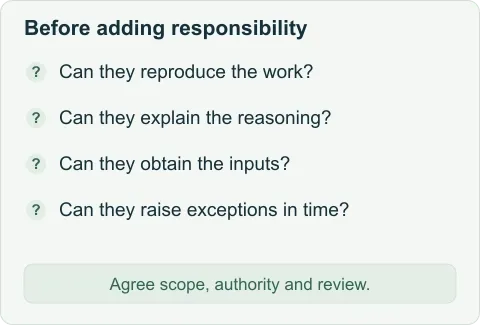
Before expanding the scope, discuss whether the person can reproduce the work, explain their reasoning, obtain required inputs and raise exceptions in time. If one of those is missing, identify the support or experience still needed.
The first detailed assignment should connect to the responsibility you ultimately want the person to own. Bring both to the hiring conversation: the first defined deliverable and the fuller role it is intended to develop into.

Related: Financial analyst interview scorecard · Remote financial analysts · Talent solutions.